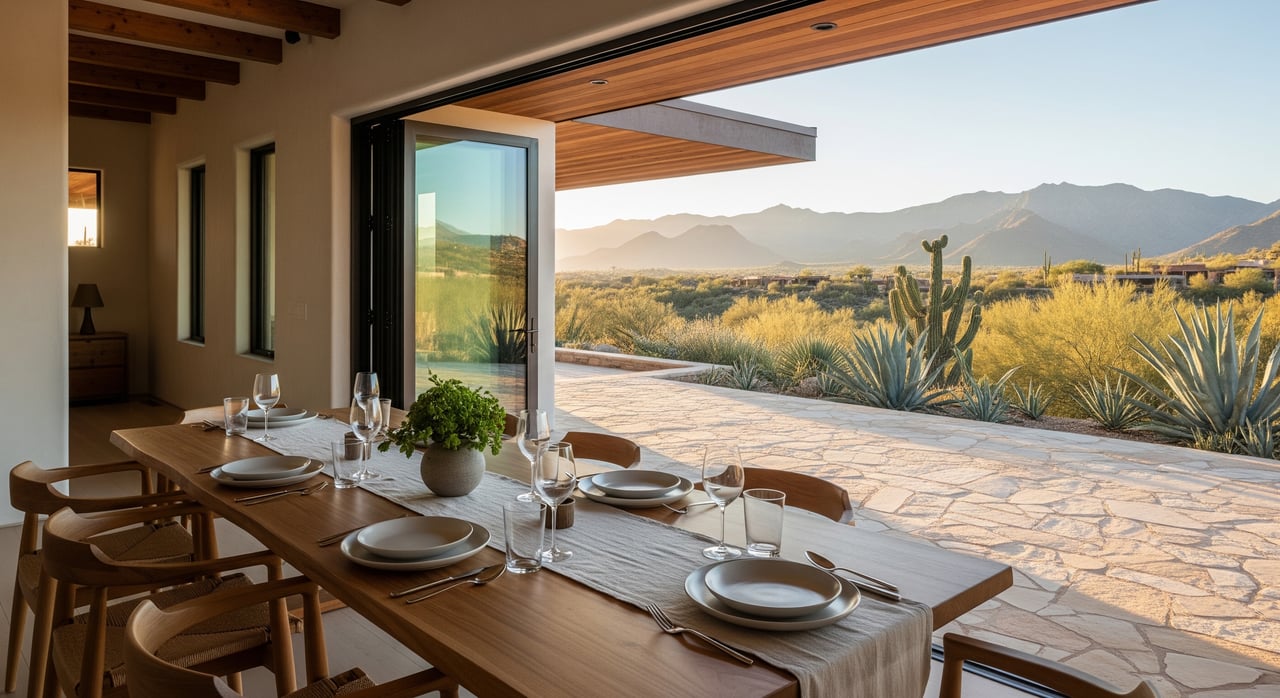
Morning light hits the Santa Catalina Mountains, the air feels a few degrees cooler than the city below, and your patio becomes the best room in the house. If you picture evenings with city lights and days that begin and end outdoors, Catalina Foothills fits your rhythm. Whether you are moving across town or relocating to Tucson, you want to know what daily life really looks like here. This guide covers the views, design, dining, outdoor access, and practical details that shape everyday living so you can decide if the Foothills is your right fit. Let’s dive in.
Setting and sense of place
Catalina Foothills sits along the southern slopes of the Santa Catalina Mountains, just north of central Tucson. The rolling terrain creates ridges, arroyos, and valley pockets that naturally frame views of the mountains and the city. You feel close to nature while staying connected to Tucson’s core.
Elevation is higher than central Tucson by several hundred feet. That small lift adds cooler evenings, clearer views, and stronger breezes compared with the low desert. Many neighborhoods are unincorporated Pima County, and the area reads as the northern, foothill side of greater Tucson.
Views shape your routine
Lot orientation and privacy
Homes here are often sited to catch the best angles. Patios and living areas frequently face the Catalina range or the Tucson basin, so sunrise coffee and sunset dinners become part of your day. Sloped lots, terraced yards, and native landscaping add privacy without heavy fencing.
Night skies and city lights
Clear desert skies, starlight, and city lights are a local calling card. If you enjoy evening outdoor living, look for properties with covered patios, rooftop decks, or courtyards that frame those night views.
Architecture and design essentials
Southwestern and modern styles
You’ll see a mix of styles. Southwestern and Spanish-influenced stucco homes with courtyards and tile roofs feel right at home in the desert. Desert-modern and contemporary designs use glass, deep shade, and clean lines to blend indoors and out. You’ll also find midcentury touches and updated ranch-style homes.
Outdoor living features
In the Foothills, the outside is part of the floor plan. Buyers often expect courtyards, deep shaded patios or ramadas, and pools. Many homes feature saltwater or heated pools for longer seasons. Shading and orientation to limit heat gain are common, along with energy-conscious window placements.
Low-water landscaping
Xeriscaping is the norm. Expect native plants like saguaro, palo verde, ocotillo, and agave, paired with rock outcroppings and boulder accents. It is attractive, low maintenance, and water-smart. If you plan updates, a simple palette and clean lines complement the natural setting.
Climate and how you live
Seasons and monsoon rhythms
The Tucson area has a hot desert climate. Summer highs often reach the upper 90s to low 100s Fahrenheit, while winter lows commonly settle in the 40s. The foothill elevation softens the heat slightly. A pronounced monsoon season in mid-summer into early fall brings afternoon storms and dramatic skies, then you enjoy cool, dry winters.
Daily habits for comfort
Locals plan outdoor time early in the morning or later in the afternoon. Shaded patios, misting fans, and poolside breaks make summer feel manageable. In winter, many patios become sunny living rooms for lunch, reading, and remote work.
Trails, parks, and Mount Lemmon
Sabino Canyon access
Sabino Canyon Recreation Area, within the Coronado National Forest, sits right at the foothill edge. It offers hiking, a tram, picnic spots, and seasonal pools in the canyon. It works for quick walks or longer hikes, and you can choose your effort level.
Sky Island day trips
Catalina Highway, known as the Sky Island Scenic Byway, climbs to Mount Lemmon’s pine forests and cooler air. Day trips for hiking and picnics are common, and in winter you may find snow at higher elevations. Trailhead parking can fill up during peak times, so many residents go early or on weekdays.
Dining and shopping highlights
La Encantada and local spots
La Encantada is the Foothills’ signature open-air shopping center with boutiques, restaurants, and services in a scenic setting. Beyond that, you’ll find neighborhood dining along key roads throughout the area, from casual Southwestern fare to modern American and farm-to-table menus.
Groceries and essentials
You have convenient access to regional grocery stores and specialty markets in the Foothills. Larger retail and big-box options are a short drive away in adjacent parts of Tucson.
Schools and education
Much of the area is served by Catalina Foothills School District, including Catalina Foothills High School. The district is widely recognized as a strong public school option in the region. Always verify exact boundaries, enrollment details, and programs directly with the district before you buy.
Getting around and commute
Driving is the norm here. Winding local roads connect you to main arteries into central Tucson, downtown, and the University of Arizona. Depending on your exact location and traffic, many commutes run 15 to 30 minutes to these destinations. Public transit is limited compared with urban neighborhoods. Tucson International Airport is typically about a 20 to 30 minute drive.
Real estate snapshot
Home types and settings
You’ll find variety, from single-level homes and condos to large custom estates and gated communities along ridgelines. Lots range from neighborhood parcels to multi-acre sites at higher elevations. The Foothills is one of the higher-priced submarkets in Tucson, with view lots and remodeled homes often commanding premiums.
Buyer priorities
- Views and privacy are often top of the list.
- Outdoor living spaces and pools suited to the desert climate.
- Floor plan preferences vary by lot: single-level for convenience or multi-level for maximizing views.
- Proximity to recreational amenities and access to schools.
- Lower tolerance for heavy traffic and a preference for quiet streets.
Seller tips
- Focus on curb appeal with clean, low-water landscaping and clear view corridors.
- Stage patios and highlight city-light vistas in evening photographs.
- Address hillside practicalities early, including any retaining walls, drainage, or slope notes in your disclosures.
If you want to maximize presentation, a design-led staging plan can help buyers see how indoor and outdoor spaces work together. Small, targeted improvements to lighting, shade, and landscape edges can make a measurable difference.
Risks and practical checks
Buying in the foothills brings unique benefits and responsibilities. Before you submit an offer, consider the following:
- Wildland-Urban Interface and fire risk. Some properties sit in areas where defensible space and brush clearance are important. Check local fire mitigation requirements and confirm insurance availability and cost.
- Monsoon drainage. Sloped lots may have grading plans, drainage easements, or channels. Ask for documentation and recent history of runoff on or near the property.
- HOA and design review. Many Foothills neighborhoods have HOAs and architectural rules for materials, colors, and additions. Verify fees, covenants, and any view-protection guidelines.
- Utilities and services. Most homes connect to municipal water and regional sewer. Larger or more remote lots may vary, so confirm for each property.
- Construction realities. Building or expanding on a slope can require grading and retaining walls, which adds cost compared with flat lots.
A strong inspection team familiar with foothill foundations, drainage, and hillside construction is invaluable. Also request insurance quotes early, including wildfire coverage if applicable.
Catalina Foothills vs nearby areas
Catalina Foothills vs Oro Valley
- Foothills: hillside lots, immediate mountain views, closer to central Tucson.
- Oro Valley: more master-planned areas, newer construction on flatter terrain, farther north with extensive retail and resort development.
Catalina Foothills vs Downtown and central Tucson
- Foothills: lower density, car-forward lifestyle, views and privacy.
- Downtown/central: urban walkability, historic neighborhoods, close to cultural venues and restaurants.
Catalina Foothills vs Tanque Verde and southeast Tucson
- Foothills: rugged mountain-desert edge with hillside homes.
- Tanque Verde/east: more rural feel with potential for larger parcels and equestrian setups.
Catalina Foothills vs SaddleBrooke and retirement communities north of Tucson
- Foothills: mixed ages and quicker access to Mount Lemmon and central Tucson.
- SaddleBrooke: age-targeted communities with defined amenity packages like golf and social clubs.
How to explore like a local
- Visit at sunrise and sunset to test views, light, and patio comfort.
- Drive your likely commute during peak hours to gauge real times.
- Walk the neighborhood in the evening to check noise, privacy, and city-light sightlines.
- If possible, tour during monsoon season to see drainage and road conditions.
- Hike Sabino Canyon early to understand parking and trail use.
- Verify school boundaries and programs with the district before you bid.
Thinking about buying or selling in the Foothills? You deserve clear guidance, design-smart presentation, and a plan tailored to your goals. Connect with Lisa Ambroziak for concierge-level representation that pairs local expertise with polished marketing.
FAQs
What is the weather like in Catalina Foothills year-round?
- Expect summer highs in the upper 90s to low 100s Fahrenheit, winter lows in the 40s, a mid-summer monsoon pattern, and slightly cooler conditions than central Tucson due to elevation.
How long is the commute from Catalina Foothills to downtown Tucson or the University of Arizona?
- Many residents report drives of about 15 to 30 minutes depending on your exact starting point, traffic, and time of day.
What home styles are common in the Catalina Foothills?
- You’ll see Southwestern and Spanish-influenced stucco homes, desert-modern and contemporary designs with strong indoor-outdoor flow, midcentury elements, and updated ranch-style properties.
Is there convenient access to hiking and outdoor recreation?
- Yes, Sabino Canyon Recreation Area is nearby for hiking and picnics, and Catalina Highway provides direct access to Mount Lemmon for cooler temperatures and forest trails.
What should buyers verify before purchasing a hillside home in Catalina Foothills?
- Check wildfire mitigation requirements, drainage and grading plans, HOA and architectural rules, utility connections, and insurance options, and hire inspectors experienced with hillside properties.
How does Catalina Foothills compare to Oro Valley for lifestyle and housing?
- The Foothills emphasizes hillside views and proximity to central Tucson, while Oro Valley offers more master-planned communities on flatter terrain and robust retail farther north.
